V.A. INTRODUCTION
It is recognized that at the time of authorization, information on the safety of a medicinal product is relatively limited. This is due to many factors including the relatively small numbers of subjects in clinical trials compared with the intended treatment population, restricted population in terms of age, gender and ethnicity, restricted co-morbidities, restricted co-medications, restricted conditions of use, relatively short duration of exposure and follow up, and the statistical problems associated with looking at multiple outcomes.
A medicinal product is authorized on the basis that in the specified indication(s), at the time of authorization, the benefit-risk balance is judged to be positive for the target population. A typical medicinal product will have multiple risks attached to it and individual risks will vary in terms of severity, effect on individual patients and public health impact. However, not all actual or potential risks will have been identified at the time when an initial authorization is sought and many of the risks associated with the use of a medicinal product will only be discovered and characterized in the post-authorization phase. The aim of a risk management plan (RMP) is to document the risk management system considered necessary to identify, characterize and minimize a medicinal product's important risks. To this end, the RMP contains:
1. The identification or characterization of the safety profile of the medicinal product, with emphasis on important identified and important potential risks and missing information, and also on which safety concerns need to be managed proactively or further studied (the 'safety specification');
2. The planning of pharmacovigilance activities to characterise and quantify clinically relevant risks, and to identify new adverse reactions (the 'pharmacovigilance plan');
3. The planning and implementation of risk minimisation measures, including the evaluation of the effectiveness of these activities (the 'risk minimisation plan').
As knowledge regarding a medicinal product's safety profile increases over time, so will the risk management plan change.
This module includes the principles of risk minimization, it should be read in conjunction with GVP Module XVI and GVP Module XVI Addendum I on educational materials.
V.A.1. Terminology
The overall aim of risk management is to ensure that the benefits of a particular medicinal product exceed the risks by the greatest achievable margin. The primary aim and focus of the RMP remains that of appropriate risk management planning throughout a medicinal product's life cycle. The risk management system shall be proportionate to the identified risks and the potential risks of the medicinal product, and the need for post-authorization safety data.
The RMP is a dynamic document that should be updated throughout the life cycle of the product(s). This includes the addition of safety concerns where required, but also, as the safety profile is further characterized, the removal or reclassification of safety concerns.
The guidance on risk classification in this document may facilitate that during the life cycle of the products the list of safety concerns in the RMP will be reduced (see also V.A.1. and V.B.5.8.):
- It may be that important potential risks can be removed from the safety specification in the RMP (e.g. when accumulating scientific and clinical data do not support the initial supposition, the impact to the individual has been shown to be less than anticipated resulting in the potential risk not being considered important, or when there is no reasonable expectation that any pharmacovigilance activity can further characterize the risk), or they need to be reclassified to 'important identified risks' (e.g. if scientific and clinical data strengthen the association between the risk and the product).
- In certain circumstances, where the risk is fully characterized and appropriately managed, important identified risks may be removed from the safety specification (e.g. for products marketed for a long time for which there are no outstanding additional pharmacovigilance activities and/or the risk minimization activities recommending specific clinical measures to address the risk have become fully integrated into standard clinical practice, such as inclusion into treatment protocols or clinical guidelines).
- Given the overall aim of obtaining more information regarding the benefit-risk balance in certain populations excluded in the pre-authorization phase, it is expected that as the product matures, the classification as missing information might not be appropriate anymore once new data become available, or when there is no reasonable expectation that the existing or future feasible pharmacovigilance activities could further characterize the safety profile of the product with respect to the areas of missing information.
With the exception of some patient registries, it is expected that over time the additional pharmacovigilance activities in the RMP will be completed and thus removed from the RMP.
The need to continue additional risk minimization activities may change, as the recommendations for specific clinical measures to address the risk become part of the routine practice such as inclusion into standard treatment protocols in the KSA, or in response to the findings of effectiveness of risk minimization evaluations (i.e. they may need to be replaced with more effective activities). Some risk minimization activities might be needed to be retained for the lifetime of the medicinal product (e.g. pregnancy prevention programs).
V.B.2. Responsibilities for risk management within an organization
The principle organizations directly involved in medicinal products' risk management planning are applicants/MAHs and the SFDA.
The MAH or applicant is responsible for:
- Having an appropriate risk management system in place;
- Ensuring that the knowledge and understanding on the product's safety profile, following its use in clinical practice, are critically reviewed. The MAH should monitor pharmacovigilance data to determine whether there are new risks or whether risks have changed or whether there are changes to the benefit-risk balance of medicinal products and update the risk management system and the RMP accordingly, as described below. The critical review of the safety profile of the product is a continuous activity and is reflected in data submitted with PSUR (see GVP Module VII), where an RMP submission may or may not be warranted. In addition, there are two specific milestones when the MAHs of products approved following full initial marketing authorization applications are advised to reflect on the need to review the list of safety concerns and the planned and ongoing pharmacovigilance and risk minimization activities:
- With the (first) 5-year renewal;
- In the time period when the first PSUR following the first 5-year renewal is due for submission. It is anticipated that this PSUR submission would occur approximately 8-9 years following the granting of the marketing authorization, at the time when the assessment of the initial marketing authorization applications for generic products for the active substance commences. As such, the safety profile of the medicinal product is likely to be sufficiently well characterized to allow for a critical review and update of the list of safety concerns.
V.B.3. Overview of the format and content of the risk management plan (RMP)
The RMP consists of seven parts. Part II of the RMP - Safety specification is subdivided into modules, so the content can be tailored to the specifics of the medicinal product. RMP part II modules generally follow the section titles in the safety specification of ICH-E2E. The modular structure aims to facilitate the update of the RMP; in addition, in specific circumstances certain RMP modules may have reduced content requirements (see V.C.1.1.). However, the RMP document is expected to be submitted as one single document including all modules and annexes, as relevant.
An overview of the parts and modules of the RMP is provided below in Table V.1.:
Table V.1. Overview of the RMP parts and modules
Part I | Product(s) overview |
Part II | Safety specification |
Module SI | Epidemiology of the indication(s) and target population(s) |
Module SII | Non-clinical part of the safety specification |
Module SIII | Clinical trial exposure |
Module SIV | Populations not studied in clinical trials |
Module SV | Post-authorization experience |
Module SVI | Additional requirements for the safety specification |
Module SVII | Identified and potential risks |
Module SVIII | Summary of the safety concerns |
Part III | Pharmacovigilance plan (including post-authorization safety studies) |
Part IV | Plans for post-authorization efficacy studies |
Part V | Risk minimization measures (including evaluation of the effectiveness of risk minimization activities) |
Part VI | Summary of the RMP |
Part VII | Annexes |
The amount of information, particularly in RMP part II, should be proportionate to the identified risk and the potential risk, and will depend on the type of medicinal product, its risks, and where it is situated in its life cycle.
The marketing authorization applicants/holders should adapt the RMPs of advanced medicinal products (ATMP), considering and discussing the anticipated post-authorization follow-up needs, focusing on particularities of these medicinal products. The specific RMP content requirements for ATMP should be discussed with the SFDA before the submission.
It is recommended, where appropriate, that the RMP document includes all relevant medicinal products from the same applicant/MAH containing the same active substance(s) (i.e. the RMP is an active substance-based document).
Information in the RMP should be provided in enough detail whilst avoiding unnecessary text that distracts from the key issues to be considered for risk management of the product. However, the safety specifications in the RMP should not be a duplication of data submitted elsewhere in the dossier, unless the sections are intended to be common modules with other documents such as the PSUR. Where applicable, the information in the RMP should provide an integrated overview/discussion focusing on the most important risks that have been identified or are anticipated based on pre-clinical, clinical and post-marketing data presented in other modules of the eCTD. Any data included in the RMP should be consistent with other sections of the dossier. Links or references to relevant sections of the non-clinical and clinical overviews and summaries should be included in the RMP.
For new RMP submissions with limited safety data in the dossier, the RMP may contain the relevant safety data and discussion, to support the risk identification discussion.
To aid consistency between the information provided in the dossier and the RMP, Table V.2. indicates where information from the eCTD is likely to be discussed in the RMP. The eCTD data refers to the submission containing the RMP (e.g. initial marketing authorization applications and major variations) or to historical data already included in the dossier with previous submissions.
The RMP should be submitted as part of an eCTD submission; eCTD data/submissions in this Module should be read as eCTD or CTD data/submission, corresponding to the type of submission to the SFDA.
Table V.2. Mapping between RMP modules and information in eCTD
Part I Product(s) overview | Module 2.3 Quality overall summary Module 3 Quality |
Module SI Epidemiology of the indication(s) and target population(s) | Module 2.5 Clinical overview |
Module SII Non-clinical part of the safety specification | Module 2.4 Non-clinical overview Module 2.6 Non-clinical written and tabulated summaries Module 4 Non-clinical study reports |
Module SIII Clinical trial exposure | Module 2.7 Clinical summary Module 5 Clinical Study reports |
Module SIV Populations not studied in clinical trials | Module 2.5 Clinical overview |
Module SV Post-authorization experience | Module 2.5 Clinical overview |
Module SVI “Additional EU requirements for the safety specification" | Data not presented elsewhere in eCTD |
Module SVII Identified and potential risks | Module 2.5 Clinical overview (including benefit-risk conclusion) Module 2.7 Clinical summary (SPC) |
Module SVIII Summary of the safety concerns | Module 2.5 Clinical overview Module 2.7 Clinical summary |
Part III Pharmacovigilance plan (including post- authorization safety studies) | Module 2.5 Clinical overview Module 2.7 Clinical summary |
Part IV Plans for post-authorization efficacy studies | Module 2.5 Clinical overview Module 2.7 Clinical summary |
Part V Risk minimization measures (including evaluation of the effectiveness of risk minimization activities) | Module 2.5 Clinical overview Module 2.7 Clinical summary
|
Only key literature referenced in the RMP should be included in RMP annex 7. This should be in the format of electronic links or references if already included elsewhere in eCTD (see V.B.10.).
The description of the parts and modules of an RMP in V.B.4. provides guidance on the main topics to be addressed within each specific area. However, some sections may not be relevant to all medicinal products and there may be additional topics that need to be included but are not mentioned in this guidance. The RMP is part of the scientific dossier of a product and as such should be scientifically based and should not include any element of a promotional nature.
The preliminary section of the RMP should include the following administrative information about the RMP document:
- Data lock point of the current RMP;
- Sign off date and the version number of the RMP;
- List of all parts and modules. For RMP updates, modules version number and date of approval (opinion date) should be tabulated in this section. High level comment on the rationale for creating the update should be included for significant changes to each module;
The evidence of oversight from the QPPV is not needed for versions submitted for assessment. The QPPV's actual signature or the evidence that the RMP was reviewed and approved by the QPPV should be included in the finalized approved version of the document; for eCTD submissions this would be the RMP with the last eCTD sequence of the procedure (e.g. closing sequence). The evidence of QPPV oversight can take the form of a statement that the RMP has been reviewed and approved by the MAH/applicant's QPPV and that the electronic signature is on file.
V.B.4. RMP part I “Product(s) overview"
This should provide the administrative information on the RMP and an overview of the product(s). The information presented should be current and accurate in relation to the ongoing application as it is anticipated to appear in the marketing authorization. The information should include:
Active substance information:
• Active substance(s);
• Pharmacotherapeutic group(s) (ATC code); name of the:
- Marketing authorization applicant - for initial marketing authorization applications,
or
- MAH- for RMPs submitted with post-authorization procedures;
• Medicinal product(s) to which this RMP refers.
• Brief description of the product including:
- Chemical class;
- Summary of mode of action;
- Important information about its composition (e.g. origin of active substance of biologicals, relevant adjuvants or residues for vaccines);
• eCTD link to the proposed product information, as appropriate;
• Indications: approved and proposed (if RMP submitted with an extension/restriction of indication);
• Dosage (summary information – only related to main population; not a duplication of SPC section 4.2);
• Pharmaceutical forms and strengths;
• Whether the product is subject to additional monitoring in the KSA (at initial marketing authorization application conclusion or with RMP updates).
V.B.5. RMP part II “Safety Specification"
The purpose of the safety specification is to provide an adequate discussion on the safety profile of the medicinal product(s), with focus on those aspects that need further risk management activities. It should include a summary of the important identified risks of a medicinal product, important potential risks, and missing information. It should also address the populations potentially at risk (where the product is likely to be used i.e. both as authorized and off-label use), and any outstanding safety questions that warrant further investigation to refine the understanding of the benefit-risk balance during the post-authorization period. The safety specification forms the basis of the pharmacovigilance plan and the risk minimization plan.
The safety specification consists of eight RMP modules, of which RMP modules SI-SV, SVII and SVIII correspond to safety specification headings in ICH-E2E. RMP module SVI includes additional elements required to be submitted.
Although the elements outlined in V.B.5.2. to V.B.5.9. serve as a guide only, it is recommended that applicants/ MAHs follow the structure provided when compiling the safety specification.
Details of specific requirements for initial marketing authorization applications are included in V.C.1.1.
V.B.5.1. General Considerations for generic products and advanced therapy medicinal products
V.B.5.1.1. Generics
For generic medicinal products the expectation is that the safety specification is the same as that of the reference product or of other generic products for which an RMP is in place. If discrepancies exist between approved RMPs for such products, then the applicant is expected to propose and justify the most appropriate safety specification for their product. Exceptionally, the applicant for a new generic medicinal product may add or remove safety concerns compared with the safety profile of the reference product if this is appropriately justified (for example, when there is a more up to date understanding of the current safety profile or when there are differences in product characteristics compared with the reference product, e.g. there is a risk associated with an excipient present only in some of the products containing the same active substance).
V.B.5.1.2. Advanced therapy medicinal products
Certain products for human medicinal use are categorized in the KSA as advanced therapy medicinal products. These products broadly comprise:
Gene therapy medicinal products;
Somatic cell therapy medicinal products;
Tissue engineered products.
Because of the nature of these products, risks may occur that are not normally a concern with other medicinal products including risks to living donors, risks of germ line transformation and transmission of vectors. These risks need to be taken into consideration when developing the safety specification for ATMPs (see V.B.5.8.).
V.B.5.2. RMP part II, module SI “Epidemiology of the indication(s) and target population(s)"
This RMP module should include incidence, prevalence, outcome of the (untreated) target disease (i.e. indications) and relevant co-morbidity and should when relevant for assessment of safety and risk management be stratified by age, gender, and ethnic origin. Risk factors for the disease and the main existing treatment options should also be described. The emphasis should be on the epidemiology of the proposed indication in the KSA. Differences in the epidemiology in different regions should be discussed (where epidemiology varies across regions).
This section should also describe the relevant adverse events to be anticipated in the (untreated) target population in the KSA, their frequency and characteristics. The text should help anticipate and interpret any potential signals and help identify opportunities for risk minimization. The text should be kept concise and should not include any element of a promotional nature.
V.B.5.3. RMP part II, module SII “Non-clinical part of the safety specification"
This RMP module should present a high-level summary of the significant non-clinical safety findings, for example:
- Toxicity (key issues identified from acute or repeat-dose toxicity, reproductive/developmental toxicity, genotoxicity, carcinogenicity);
- Safety pharmacology (e.g. cardiovascular system, including QT interval prolongation, nervous system);
- Other toxicity-related information or data.
What constitutes an important non-clinical safety finding will depend upon the medicinal product, the target population and experience with other similar compounds or therapies in the same class. Normally, significant areas of toxicity (by target organ system) and the relevance of the findings to the use in humans should be discussed. Also, quality aspects if relevant to safety (e.g. genotoxic impurities) should be discussed. If a product is intended for use in women of childbearing age, data on the reproductive/developmental toxicity should be explicitly mentioned and the implications for use in this population discussed. Where the non-clinical safety finding could constitute an important potential risk to the target population, it should be included as a safety concern in RMP module SVIII. Where the non-clinical safety finding is not considered relevant for human beings, provision of a brief explanation is required, but the safety finding is not expected to be carried forward to SVII and SVIII as a safety concern.
If, based on the assessment of the non-clinical or clinical data, additional non-clinical studies are considered warranted and proposed to be part of the pharmacovigilance plan, this should be briefly discussed here.
Final conclusions on this section should be aligned with content of module SVII and any safety concerns should be carried forward to module SVIII.
The content of this section should be assessed for relevance over time. Post-authorization, this section would only be expected to be updated when new non-clinical data impact the list of safety concerns. Safety concerns identified on the basis of non-clinical data which are no longer relevant and/or have not been confirmed when sufficient relevant post-marketing experience and evidence are gathered, can be removed from the list of safety concerns.
V.B.5.4. RMP part II, module SIII “Clinical trial exposure"
In this RMP module, in order to assess the limitations of the human safety database, summary information on the patients studied in clinical trials should be provided in an appropriate format (e.g. tables/graphs) at time of submission of the initial RMP or when there is a major update due to new exposure data from clinical studies (e.g. in a new indication). The content of this section should be assessed for relevance over time and, in the absence of new significant clinical trial exposure data, this section does not need to be updated.
The size of the study population should be detailed using both numbers of patients and, where appropriate, patient time exposed to the medicinal product. This should be stratified for relevant categories; stratifications would normally include:
Pediatric data should be divided by age categories (e.g. ICH-E11); similarly, the data on older people should be stratified into age categories reflecting the target population (e.g. 65-74, 75-84 and 85 years and above).
Unless clearly relevant and duly justified, data should not be presented by individual trial, but pooled. Totals should be provided for each table/graph as appropriate. Where patients have been enrolled in more than one trial (e.g. open label extension study following a trial) they should only be included once in the age/gender/ethnic origin tables. Reasons for differences in the total numbers of patients between tables should be explained.
When the RMP is being submitted with an application for a new indication, a new pharmaceutical form or route of administration, the clinical trial data specific to the application should be presented separately at the start of the module as well as being pooled across all indications.
V.B.5.5. RMP part II, module SIV “Populations not studied in clinical trials"
Populations that are considered under missing information should be described in this RMP module.
Information on the low exposure of special populations or the lack thereof (e.g. pregnant women, breast-feeding women, patients with renal impairment, hepatic impairment or cardiac impairment, populations with relevant genetic polymorphisms, immuno-compromised patients and populations of different ethnic origins) should be provided where available and as appropriate. The degree of renal, hepatic or cardiac impairment should be specified as well as the type of genetic polymorphism, as available.
If the product is expected to be used in populations not studied and if there is a scientific rationale to suspect a different safety profile, but the available information is insufficient to determine whether or not the use in these circumstances could constitute a safety concern, then this should be included as missing information in the RMP. Excluded populations from the clinical trial development program should be included as missing information only when they are relevant for the approved and proposed indications, i.e. “on-label", and if the use in such populations might be associated with risks of clinical significance. In discussing differences between target populations and those exposed in clinical trials it should be noted that some differences may arise through trial setting (e.g. hospital or general practice) rather than through explicit inclusion/exclusion criteria. When such populations are proposed as missing information, then RMP module SIV should also include a discussion on the relevant subpopulations.
If there is evidence that use in excluded populations is associated with an undesirable clinical outcome, then the outcome should be included as an important (potential) risk.
V.B.5.6. RMP part II, module SV “Post-authorization experience"
If post-marketing data are available from post-authorization experience in other regions outside the KSA, where the product is already authorized or from other authorized products containing the same active substance, from the same MAH, the data should be discussed in this RMP module.
It should only provide an overview of experience in the post-authorization phase that is helpful for risk management planning purposes. It is not the intention to duplicate information from the PSUR.
Additionally, a discussion on how the medicinal product is being used in practice and on-label and off- label use, including use in the special populations mentioned in RMP module SIV, can also be included when relevant for the risk identification discussion in module SVII.
Where appropriate and relevant for the discussion in SVII, data on use in markets outside the KSA from indications not authorized in KSA should also be summarized, and the implications for the authorization in the KSA should be discussed.
V.B.5.7. RMP part II, module SVI “Additional requirements for the safety specification"
In addition to safety topics required by ICH-E2E, the following should be addressed in the RMP: the potential for misuse for illegal purposes, and, where appropriate, the proposed risk minimization measures, e.g. limited pack size, controlled access program, special medical prescription (see also V.B.8.).
V.B.5.8. RMP part II, module SVII “Identified and potential risks"
This RMP module should provide a focused discussion on the identification of important identified and important potential risks, and missing information (i.e. safety concerns).
The following safety topics derived from specific situations/data sources are thought to be of particular interest for the risk identification discussion in module SVII, and should be discussed when they lead to risks of the product:
• Potential harm from overdose, whether intentional or accidental, for example in cases where there is a narrow therapeutic margin or potential for major dose-related toxicity, and/or where there is a high risk of intentional overdose in the treated population (e.g. in depression). Where harm from overdose has occurred during clinical trials this should be explicitly mentioned and, where relevant, the important risks following overdose should be included as safety concerns in RMP module SVIII and appropriate risk minimization proposed in RMP part V;
• Potential for risks resulting from medication errors, defined as an unintended failure in the drug treatment process that leads to, or has the potential to lead to, harm to the patient. Medication errors leading to important risks, identified during product development including clinical trials, should be discussed and information on the errors, their potential cause(s) and possible remedies given. Where applicable an indication should be given of how these have been considered in the final product design. Important risks related to medication errors in the post marketing period should be discussed in the updated RMP and ways of limiting the errors proposed;
• Potential for transmission of infectious agents due to the nature of the manufacturing process or the materials involved. For live attenuated vaccines any potential for transmission of mutated live vaccine virus, and the potential of causing the disease in immunocompromised contacts of the vaccine should be discussed with the view of considering them as important potential risks;
• Potential for off-label use, when differences in safety concerns between the target and the off-label population are anticipated, the potential risks arising from the off-label use of the product should be considered for inclusion in the safety specifications;
• If an important identified or potential risk common to other members of the pharmacological class is not thought to be an important identified or important potential risk with the concerned medicinal product, the evidence to support this should be provided and discussed;
• Important risks related to identified and potential pharmacokinetic and pharmacodynamic interactions should be discussed in relation to the treatments for the condition, but also in relation to commonly used medications in the target population. The evidence supporting the interaction and possible mechanism should be summarized, the potential health risks discussed for different indications and populations and plans to further characterize and minimize the risks described. Important risks derived from interactions should be included as a safety concern;
• Risks in pregnant and lactating women, e.g. teratogenic risk - direct or through exposure to semen: contraception recommendations can be considered as risk minimization measures. Further guidance on risk management in case of exposure of the embryo / fetus to teratogenic agents can be found in the GVP P.III. and GVP Module XVI;
• Effect on fertility - appropriate risk minimization measures should be considered, e.g. routine risk communication and/or additional activities recommending fertility preservation: sperm cryopreservation in men and embryo and oocyte cryopreservation in women;
• Risks associated with the disposal of the used product (e.g. transdermal patches with remaining active substance or remains of radioactive diagnostics);
• Risks related to the administration procedure (e.g. risks related to the use of a medical device (malfunction which impacts on the dose administered, risk of variability in complex administrations);
• Pediatric safety issues that are particular causes of concern in pediatric population, as described in section 5 of annex I of the PIP opinion (Potential long-term safety/efficacy issues in relation to pediatric use for consideration in the RMP/Pharmacovigilance activities).
For RMPs of ATMPs, the applicants should also consider the possible specific risks in drafting the safety specifications.
V.B.5.8.1. RMP part II, module SVII section “Identification of safety concerns in the initial RMP submission"
This RMP section should contain the initial identification of safety concerns and is expected to be populated with the initial submission of an RMP, either at the time of the initial marketing authorization (MA) application or post-authorization (i.e. for approved products that previously did not have an RMP).
This section is expected to be “locked" and not change after the approval of the initial RMP.
V.B.5.8.1.a. RMP part II, module SVII sections “Risk considered important for inclusion in the list of safety concerns" and “Risk not considered important for inclusion in the list of safety concerns"
In this RMP section the following information should be summarized and discussed:
For risks not taken forward as safety concerns, the information can be grouped by reasons for not including them as safety concerns.
V.B.5.8.2. RMP part II, module SVII section “New safety concerns and reclassification with a submission of an updated RMP"
In the post-authorization phase, it is expected that new identified and potential risks of the product are presented in the safety section of the dossier (with e.g. signal evaluation, periodic benefit-risk evaluation, or safety variations procedures) together with an evaluation on whether the risks should be considered important and added in the safety specification in the RMP. This discussion should not be duplicated in the RMP, but the details of any new important identified or potential risk should be included in the RMP section described in V.B.5.8.3.
When an important identified or potential risk or missing information is re-classified or removed, a justification should be provided in this RMP section, with appropriate reference to the safety data. The information included in this section may take the form of a statement describing a previous regulatory request, with a reference to the procedure where such request was formulated.
V.B.5.8.3. RMP part II, module SVII section “Details of important identified risks, important potential risks, and missing information"
For RMPs containing multiple products, if there are significant differences between products (e.g. fixed dose combination products) it is appropriate to make it clear which safety concerns relate to which product.
This RMP section applies to all stages of the product's life cycle.
Presentation of important identified risks and important potential risks data:
• Name of the risk (using MedDRA terms when appropriate);
• potential mechanism;
• Evidence source(s) and strength of the evidence (i.e. the scientific basis for suspecting the association);
• Characterization of the risk: e.g. frequency, absolute risk, relative risk, severity, reversibility, long- term outcomes, impact on quality of life;
• Risk factors and risk groups (including patient factors, dose, at risk period, additive or synergistic factors);
• Preventability (i.e. predictability of a risk; whether risk factors have been identified that can be minimized by routine or additional risk minimization activities other than general awareness using the PI; possibility of detection at an early stage which could mitigate seriousness);
• Impact on the benefit-risk balance of the product;
• Public health impact (e.g. absolute risk in relation to the size of the target population and consequently actual number of individuals affected, or overall outcome at population level).
Presentation of missing information data:
• Name of the missing information (using MedDRA terms when appropriate);
• Evidence that the safety profile is expected to be different than in the general target population;
• Description of a population in need of further characterization, or description of the risk anticipated in the population not studied, as appropriate.
V.B.5.9. RMP part II, module SVIII “Summary of the safety concerns"
In this RMP module, a list of safety concerns should be provided with the following categories:
V.B.6. RMP part III “Pharmacovigilance plan (including post-authorization safety studies)"
The purpose of the pharmacovigilance plan in part III of the RMP is to present an overview and discuss how the applicant/MAH plans to further characterize the safety concerns in the safety specification. It provides a structured plan for:
• The investigation of whether a potential risk is confirmed as an identified risk or refuted;
• Further characterization of safety concerns including severity, frequency, and risk factors;
• How missing information will be sought;
• Measuring the effectiveness of risk minimization measures.
It does not include actions intended to reduce, prevent or mitigate risks; these are discussed in RMP part V.
The pharmacovigilance plan should focus on the safety concerns summarized in RMP module SVIII of the safety specifications and should be proportionate to the benefits and risks of the product. Early discussions between the SFDA and the applicant/MAH are recommended to identify whether, and which, additional pharmacovigilance activities are needed and consequently milestones should be agreed.
Pharmacovigilance activities can be divided into routine and additional pharmacovigilance activities.
V.B.6.1. RMP part III section “Routine pharmacovigilance activities"
Routine pharmacovigilance is the primary/minimum set of activities required for all medicinal products as per the obligations set out in this guidance. Signal detection, which is part of routine pharmacovigilance, is an important element in identifying new risks for all products. The descriptions of these activities in the pharmacovigilance system master file (see GVP Module II) are not required to be repeated in the RMP.
The SFDA may make recommendations for specific activities related to the collection, collation, assessment and reporting of spontaneous reports of adverse reactions which differ from the normal requirements for routine pharmacovigilance (see GVP Module I). If these recommendations include recording of tests (including in a structured format) that would form part of standard clinical practice for a patient experiencing the adverse reaction, then this requirement would still be considered routine. The routine pharmacovigilance section of the pharmacovigilance plan should be used in these circumstances to explain how the applicant will modify its routine pharmacovigilance activities to fulfil any special committee and the SFDA recommendations on routine pharmacovigilance.
However, if the recommendation includes the submission of tissue or blood samples to a specific laboratory (e.g. for antibody testing) that is outside standard clinical practice, then this would constitute an additional pharmacovigilance activity.
This RMP section should describe only the routine pharmacovigilance activities beyond adverse reaction reporting and signal detection.
V.B.6.1.1. Specific adverse reaction follow-up questionnaires
Where an applicant/MAH is requested, or plans, to use specific questionnaires to obtain structured information on reported suspected adverse reactions of special interest, the use of these materials should be described in the routine pharmacovigilance activities section and copies of these forms should be provided in RMP annex 4.
Without prejudice to the originality of the format of the questionnaire(s), it is in the interest of public health that questionnaire(s) used by different applicants/MAHs for the same adverse event should be kept as similar as possible, in order to deliver a consistent message and to provide useful data for the analysis of the reports, which are relevant for regulatory decisions, while decreasing the burden on healthcare professionals.
Therefore, MAHs are strongly encouraged to share the content of their questionnaire(s) upon request from other MAHs.
V.B.6.1.2. Other forms of routine pharmacovigilance activities
The description of the planned other forms of routine pharmacovigilance activities should be described in this section, e.g. the high-level description of the enhanced passive surveillance system, observed versus expected analyses, cumulative reviews of adverse events of interest.
V.B.6.2. RMP part III section “Additional pharmacovigilance activities"
The applicant/MAH should list in this RMP section their planned additional pharmacovigilance activities, detailing what information is expected to be collected that can lead to a more informed consideration of the benefit-risk balance.
Additional pharmacovigilance activities are pharmacovigilance activities that are not considered routine. They may be non-clinical studies, clinical trials or non-interventional studies. Examples include long-term follow-up of patients from the clinical trial population or a cohort study to provide additional characterization of the long-term safety of the medicinal product. When any doubt exists about the need for additional pharmacovigilance activities, consultation with the SFDA should be considered.
Studies in the pharmacovigilance plan aim to identify and characterize risks, to collect further data where there are areas of missing information or to evaluate the effectiveness of additional risk minimization activities. They should relate to the safety concerns identified in the safety specification, be feasible and should not include any element of a promotional nature.
Studies in the pharmacovigilance plan should be designed and conducted according to the respective legislation in place, and recommendations in the GVP Module VIII.
Study protocols may be included for evaluation in an RMP update only when the studies are included in the pharmacovigilance plan and the protocols submission has been requested by the SFDA. Reviewed and approved protocols for studies in the pharmacovigilance plan should be provided in RMP annex 3 – part C (or electronic links or references to the protocol included in other section of the eCTD dossier). Other category 3 studies protocols, submitted for information only, may also be included in RMP annex 3 – part C. Protocols of completed studies should be removed from RMP annex 3 once the final study reports are submitted to the SFDA for assessment and the study is removed from the pharmacovigilance plan (see V.B.10.3.).
The milestones for the final study report submission to the SFDA should be included for all studies in the pharmacovigilance plan.
MAHs may also submit to the SFDA protocols of post-authorization safety studies (PASS) for scientific advice.
V.B.6.3. RMP part III section “Summary table of additional pharmacovigilance activities"
This RMP section outlines the pharmacovigilance activities designed to identify and characterize risks associated with the use of a medicinal product. Some may be imposed as conditions to the marketing authorization, either because they are key to the benefit-risk profile of the product (category 1 studies in the pharmacovigilance plan), or because they are specific obligations in the context of a conditional marketing authorization or a marketing authorization under exceptional circumstances (category 2 studies in the pharmacovigilance plan).
Other studies might be required in the RMP to investigate a safety concern or to evaluate the effectiveness of risk minimization activities. Such studies included in the pharmacovigilance plan are also legally enforceable (category 3 studies in the pharmacovigilance plan).
For generic products, the pharmacovigilance plan will reflect the outstanding needs for pharmacovigilance investigations at the time of their approval. In some cases, ongoing or planned PASS for the originator product would also be required to be conducted for the generic products (e.g. registries may need to be in place to include most/all patients treated with the medicine, be it generic or originator products). Where applicable, the MAHs are encouraged to set up joint PASS, for instance in the case of registries or when a referral has resulted in an imposed PASS for all authorized medicinal products containing a named substance in a specified indication.
V.B.7. RMP part IV “Plans for post-authorization efficacy studies"
This RMP part should include a list of post-authorization efficacy studies (PAES) imposed as conditions to the marketing authorization or when included as specific obligations in the context of a conditional marketing authorization or a marketing authorization under exceptional circumstances. If no such studies are required, RMP Part IV may be left empty.
V.B.8. RMP part V “Risk minimization measures (including evaluation of the effectiveness of risk minimization activities)"
Part V of the RMP should provide details of the risk minimization measures which will be taken to reduce the risks associated with respective safety concerns.
For active substances where there are individual products with substantially different indications or target populations, it may be appropriate to have a risk minimization plan specific to each product. i.e. products where the indications lie in different medical specialties and have different safety concerns associated; products where risks differ according to the target population; products with different legal status for the supply of medicinal products to patients.
The need for continuing risk minimization measures should be reviewed at regular intervals and the effectiveness of risk minimization activities assessed (see V.B.8.). Guidance on additional risk minimization measures and the assessment of the effectiveness of risk minimization measures is provided in GVP Module XVI and GVP Module XVI Addendum I – Educational materials.
Routine risk minimization activities
Routine risk minimization activities are those which apply to every medicinal product. These relate to:
• The summary of product characteristics;
• The labelling (e.g. on inner and outer carton);
• The package leaflet;
• The pack size(s);
• The legal status of the product.
Even the formulation itself may play an important role in minimizing the risk of the product.
Summary of product characteristics (SPC) and package leaflet (PL)
The summary of product characteristics and the package leaflet are important tools for risk minimization as they constitute a controlled and standardized format for informing healthcare professionals and patients about the medicinal product. The Guideline on Summary of Product Characteristics provides guidance on how information should be presented.
Both materials provide routine risk minimization recommendations; however, there are two types of messages the SPC and PL can provide:
Routine risk communication messages: usually found in section 4.8 of the SPC or section 4 of the PL; these messages communicate to healthcare professionals and patients the undesirable effects of the medicinal product, so that an informed decision on the treatment can be made;
Routine risk minimization activities recommending specific clinical measures to address the risk: usually found in sections 4.2 and 4.4 of the SPC but can also be found in sections 4.1, 4.3, 4.5, 4.6, 4.7 and 4.9, and sections 2 and 3 of the PL; warning and precaution messages and recommendations in the SPC will include information on addressing the risk of the product by e.g.:
• Performing a test before the start of treatment;
• Monitoring of laboratory parameters during treatment;
• Monitoring for specific signs and symptoms;
• Adjusting the dose or stopping the treatment when adverse events are observed, or laboratory parameters change;
• Performing a wash-out procedure after treatment interruption;
• Providing contraception recommendations;
• Prohibiting the use of other medicines while taking the product;
• Treating or preventing the risk factors that may lead to an adverse event of the product;
• Recommending long-term clinical follow-up to identify in early stages delayed adverse events.
Pack size
Since every pack size is specifically authorized for a medicinal product, planning the number of “dosage units" within each pack and the range of pack sizes available can be considered a form of routine risk management activity. In theory, controlling the number of “dosage units" should mean that patients will need to see a healthcare professional at defined intervals, thus increasing the opportunity for testing and reducing the length of time a patient is without review. In extreme cases, making units available in only one pack size to try to link prescribing to the need for review may be considered.
A small pack size can also be useful, especially if overdose or diversion are thought to be major risks.
Legal status
Controlling the conditions under which a medicinal product may be made available can reduce the risks associated with its use or misuse.
The marketing authorization must include details of any conditions or restrictions imposed on the supply or the use of the medicinal product, including the conditions under which a medicinal product may be made available to patients. This is commonly referred to as the “legal status" of a medicinal product. Typically, it includes information on whether or not the medicinal product is subject to medical prescription. It may also restrict where the medicinal product can be administered (e.g. in a hospital) or by whom it may be prescribed (e.g. specialist).
For medicinal products only available on prescription, additional conditions may be imposed by classifying them into those available only upon either a restricted medical prescription, or upon a special medical prescription.
Restricted medical prescription
This may be used to control who may initiate treatment, prescribe the medicinal product and the setting in which the medicinal product can be given or used. When considering classification of a medicinal product as subject to restricted medical prescription, the following factors shall be considered:
• The medicinal product, because of its pharmaceutical characteristics or novelty or in the interests of public health, is reserved for treatments which can only be followed in a hospital environment.
• The medicinal product is used in the treatment of conditions which must be diagnosed in a hospital environment or in institutions with adequate diagnostic facilities, although administration and follow-up may be carried out elsewhere.
• The medicinal product is intended for outpatients, but its use may produce very serious adverse reactions requiring a prescription drawn up as required by a specialist and special supervision throughout the treatment.
Special medical prescription
For classification as 'subject to special medical prescription', the following factors shall be considered:
• The medicinal product contains, in a non-exempt quantity, a substance classified as a narcotic or a psychotropic substance within the meaning of the international conventions in force, such as the United Nations Conventions of 1961 and 1971;
• The medicinal product is likely, if incorrectly used, to present a substantial risk of medicinal abuse, to lead to addiction or be misused for illegal purposes, or
• The medicinal product contains a substance which, by reason of its novelty or properties, could be considered as belonging to the group envisaged in the second indent as a precautionary measure.
Additional risk minimization activities
Additional risk minimization activities should only be suggested when essential for the safe and effective use of the medicinal product. If additional risk minimization activities are proposed, these should be detailed and a justification of why they are needed provided. The need for continuing with such measures should be periodically reviewed.
Where relevant, key messages of additional risk minimization activities should be provided in RMP annex 6 – Details of proposed additional risk minimization activities.
Further guidance on additional risk minimization measures is provided in GVP Module XVI.
Evaluation of the effectiveness of risk minimization activities
When the RMP is updated, the risk minimization plan should include a discussion of the impact of additional risk minimization activities.
A discussion on the results of any formal assessment(s) of risk minimization activities should be included when available. If a particular risk minimization strategy proves ineffective, or to be causing an excessive or undue burden on patients or the healthcare system then consideration should be given to alternative activities. The MAH should comment in the RMP on whether additional or different risk minimization activities are needed for each safety concern or whether in their view the (additional) risk minimization measures may be removed (e.g. when risk minimization measures have become part of standard clinical practice).
If a study to evaluate the effectiveness of risk minimization activities is required or imposed by the SFDA, the study should be included in the pharmacovigilance plan, part III of the RMP.
Guidance on monitoring the effectiveness of risk minimization activities is included in the GVP Module XVI.
V.B.8.1. RMP part V section “Risk minimization plan"
In the RMP section on the risk minimization plan, for each safety concern in the safety specification, the following information should be provided:
• Routine risk minimization activities, including details of whether only inclusion in the SPC and PL is foreseen, or any other routine risk minimization activities are proposed;
• Additional risk minimization activities (if any), including individual objectives and justification of why needed, and how their effectiveness will be measured.
V.B.8.2. RMP part V section “Summary of risk minimization measures"
A table listing the routine and additional risk minimization activities by safety concern should be provided in this RMP section (e.g. the SPC section number where the risk appears in the SPC, the list of educational materials).
V.B.9. RMP part VI “Summary of the risk management plan"
A summary of the RMP for each authorized medicinal product shall be made publicly available and shall include the key elements of the RMP.
Part VI of the RMP shall be provided by the marketing authorization applicant/holder for medicinal products which have an RMP. The RMP summary should be updated when important changes are introduced into the full RMP. Changes should be considered important if they relate to the following:
New important identified or potential risks or important changes to or removal of a safety concern;
Inclusion or removal of additional risk minimization measures or routine risk minimization activities recommending specific clinical measures to address the risk;
Major changes to the pharmacovigilance plan (e.g. addition of new studies or completion of ongoing studies).
The audience of RMP summaries is very broad. To ensure that the summary can satisfy the different needs, it should be written and presented clearly. However, this does not mean that technical terms should be avoided. The document should clearly explain its purpose and how it relates to other information, in particular the product information (i.e. the SPC, the PL and the labelling).
The summary of the RMP part VI should be consistent with the information presented in RMP part II modules SVII, SVIII and RMP parts III, IV and V. It should contain the following information:
• The medicinal product and what it is authorized for;
• Summary of safety concerns and missing information;
• Routine and additional risk minimization measures;
• Additional pharmacovigilance activities.
V.B.10. RMP part VII “Annexes to the risk management plan"
The RMP should contain the annexes listed below (if applicable). If the RMP applies to more than one medicinal product, usually it would be expected that the annexes will be relevant for all products. Particular aspects not applicable to all medicinal products in the RMP should be highlighted (e.g. a follow-up form in annex 4 might only be applicable to the products containing the active substance that is causally linked to the event).
V.B.10.1. RMP annex 1
Annex 1 of the RMP is the structured electronic representation of the RMP. It is not required to be submitted in eCTD. This annex can be left empty in the RMP document.
V.B.10.2. RMP annex 2: Tabulated summary of planned, on-going, and completed pharmacovigilance study program
This annex should include a tabulation of studies included in the pharmacovigilance plan (current or in previous RMP versions; category 1, 2 and 3 studies), as follows:
• Planned and ongoing studies, including objectives, safety concern addressed, and the planned dates of submission of intermediate and final results.
• Completed studies, including objectives, safety concern addressed, and the date of submission of results to the SFDA (effective, planned, or state the reason for not submitting the results).
V.B.10.3. RMP annex 3: Protocols for proposed, on-going, and completed studies in the pharmacovigilance plan
Annex 3 should not include protocols of studies not imposed nor requested by the SFDA (i.e. not in the pharmacovigilance plan). This annex may include the electronic links or references to other modules of the eCTD dossier where the protocols are included, instead of the full protocol documents.
V.B.10.3.1. RMP annex 3 – part A: Requested protocols of studies in the pharmacovigilance plan, submitted for regulatory review with this updated version of the RMP
If protocols have been requested to be submitted for review by the SFDA, and the MAH choses to submit for assessment a study protocol within the same procedure as the RMP submission, part A should include this protocol; alternatively, the protocol might be reviewed in a stand-alone procedure, and once agreed, included in the RMP annex 3 – part C. The regulatory pathway for the protocol submission should be agreed with the SFDA.
V.B.10.3.2. RMP annex 3 – part B: Requested amendments of previously approved protocols of studies in the pharmacovigilance plan, submitted for regulatory review with this updated version of the RMP
If protocols amendments have been requested to be submitted for review by the SFDA, and the MAH choses to submit for assessment the study protocol amendment within the same procedure as the RMP submission, part B should include the updated protocol; alternatively, the protocol amendment might be reviewed in a stand-alone procedure, and once agreed, included in the RMP annex 2 – part C. The regulatory pathway for the protocol submission should be agreed with the SFDA.
Once approved, protocols from parts A or B should be moved to part C, with the next warranted RMP update.
V.B.10.3.3. RMP annex 3 – part C: Previously agreed protocols for on-going studies and final protocols not reviewed by the SFDA
Previously agreed protocols for on-going studies and final protocols not reviewed by the SFDA should be included in this part C of RMP annex 3, as follows:
• The full protocols that have been previously assessed by the SFDA and agreed (i.e. no protocol resubmission was requested). The protocols should be accompanied by the name of the procedure when the protocol was approved and date of the outcome. This may include the electronic link or reference to other modules of the eCTD dossier where the protocols have been previously submitted, instead of the full protocol documents.
• The final protocols of other category 3 studies: protocols that were not requested to be reviewed by the SFDA and are submitted by the MAH for information only.
Protocols of completed studies should be removed from this annex once the final study reports are submitted to the SFDA for assessment.
V.B.10.4. RMP annex 4: Specific adverse event follow-up forms
This annex should include all follow-up forms used by the MAH to collect additional data on specific safety concerns. The usage of follow-up forms included in this annex should be detailed in the pharmacovigilance plan in the RMP, as routine pharmacovigilance activities.
The forms that should be included in this annex are sometimes known as “event follow-up questionnaire", “adverse event data capture/collection aid" or “adverse reaction follow-up form".
V.B.10.5. RMP annex 5: Protocols for proposed and on-going studies in RMP part IV
This annex should include links or reference to other parts of the eCTD dossier, where the protocols for an imposed efficacy study are already included, for studies included in RMP part IV.
V.B.10.6. RMP annex 6: Details of proposed additional risk minimization activities
If applicable, this annex should include the proposed draft (and approved, if applicable) key messages of the additional risk minimization activities.
V.B.10.7. RMP annex 7: Other supporting data (including referenced material)
When applicable, to avoid duplication of the materials presented as references, this annex should include eCTD links or reference to other documents included in other modules of the dossier.
V.B.10.8. RMP annex 8: “Summary of changes to the risk management plan over time"
A list of all significant changes to the RMP in chronological order should be provided in this annex. This should include a brief description of the changes and the date and version number of the RMPs when:
• Safety concerns were added, removed or reclassified;
• Studies were added or removed from the pharmacovigilance plan;
• Risk minimization activities recommending specific clinical measures to address the risks or additional risk minimization activities were modified in the risk minimization plan.
V.B.10.9. RMP annex 9: Saudi-Specific Annex (SSA):
The MAH must submit a SSA whenever an EU RMP (or alternative RMP where no current EU RMP exists) is submitted. The only situation where a SSA is not routinely required is if the RMP has been prepared specifically for Saudi Arabia.
The Saudi‐specific annex (SSA) provides details not included in the EU RMP that enables the EU RMP (or, core or global RMP if no current EU RMP exists) to be adapted to the Saudi context. The SSA is required:
• To document any differences in safety concerns between the EU and Saudi (which may include differences in the frequency, severity or nature of safety concerns resulting from differences in the epidemiology of the indication and target population) and ensure that these are taken into account in determining an adequate risk management system
• To document any risk management activities not reflected in the EU RMP that are required to adequately address the safety concerns in Saudi Arabia (such as additional risk minimisation measures required by the SFDA)
• To record details of the dissemination and evaluation of effectiveness of risk minimisation activities in Saudi.
• To record milestones and timelines for reporting on additional pharmacovigilance and risk minimisation activities to the SFDA
V.B.10.9.1 Format and content of the SSA:
1. Product details
Active ingredient(s): | |
Product name (s): | |
Marketing Authorization Holder (MAH): | |
SSA version: | |
Related EU-RMP version*: | |
*Can be changed to 'core' or 'global' RMP if no EU-RMP is available.
2. Safety specification
2.1. Epidemiology of the indication(s) and target population(s) in Saudi Arabia
Include information such as epidemiology of the medical condition(s) or risk factors that reflect the authorized indication(s) in Saudi Arabia, where available.
Include special considerations to genetic or extrinsic factors that are specific to the Saudi population.
Include information on the use of product in Saudi Arabia, Saudi patient exposure and post-authorization experience in Saudi Arabia.
2.2. Saudi-specific safety concerns
To list the important safety concerns relevant in the Saudi context.
Include details of any safety concerns for Saudi Arabia that are additional to those proposed in the EU-RMP, or to include any differences in the frequency, severity or nature of safety concerns in EU RMP, resulting from differences in the epidemiology of the indication and target population in Saudi Arabia.
3. Pharmacovigilance Plan
3.1 Routine Pharmacovigilance activities in Saudi Arabia
Provide a list of routine pharmacovigilance activities that will be/ implemented in Saudi Arabia, to address the safety concerns.
3.2 Additional Pharmacovigilance activities in Saudi Arabia
This section should indicate whether there are additional pharmacovigilance activities for Saudi-specific safety concern, or for safety concerns listed in the EU-RMP and provide the details of any additional pharmacovigilance activities that will be/implemented in Saudi Arabia.
Table 1: Summary table of additional pharmacovigilance activities in Saudi Arabia:
Study and status | Objectives | Safety concerns addressed | Study location; Saudi patients included in the study? | Planned date for submission of (interim and) final results |
E.g. Study1 Planned | | | Multinational; yes | |
E.g. Registry2 Planned | | | Saudi Arabia; yes | |
4. Risk minimization measures
4.1 Saudi-specific routine risk minimization measures (required for all products)
This section should describe the routine risk minimization used for each safety concern. You should provide a reference to the Saudi PIL and SPC sections, identify and justify any differences between the statements in the EU SPC and PIL, and Saudi SPC and PIL, with justification.
Table 2: Saudi-specific routine risk minimization measures:
Safety concern
| Routine risk minimization activities | Differences between EU and Saudi routine risk minimization activities, with justification |
Important identified risks
|
Risk 1 | Saudi PIL section | |
| Saudi SPC section | |
| Other measures: [e.g. pack size, package leaflet, warning on pack] | |
Important potential risks
|
Risk 1 | Saudi PIL section | |
| Saudi SPC section | |
| Other measures: [e.g. pack size, package leaflet, warning statement on pack] | |
Important missing information
|
Risk 1 | Saudi PIL section | |
| Saudi SPC section | |
| Other measures: [E.g., pack size, package leaflet, warning statement on pack]. | |
4.2 Additional risk minimization measures in Saudi Arabia
This section should:
• Indicate all the additional risk minimization measures that will be/ implemented in Saudi Arabia, and any risk minimization activities not reflected in the EU RMP that are required to adequately address the safety concerns in Saudi Arabia.
• Indicate whether there are additional risk minimization activities for Saudi-specific safety concern, or Saudi-specific additional risk minimization measures for safety concerns listed in EU RMP and provide the detail of any additional risk minimization measures.
If there are no additional safety concerns for Saudi Arabia, and/or no Saudi-specific risk minimization activities for safety concerns listed in the EU-RMP then this can be simply stated.
If you propose to remove an additional risk minimization activity in Saudi Arabia, you should provide a justification. The justification may refer to information provided in the EU RMP. If the justification relies on evidence presented in the EU RMP (such as from the evaluation of effectiveness of risk minimization activities), you should provide a rationale for the applicability of the evidence in Saudi Arabia and preferably using supporting evidence from Saudi Arabia.
Table 3: Additional risk minimization measures in Saudi Arabia
Type of additional risk minimization activity | Objectives | Rationale for the additional risk minimization activity: | Saudi-specific additional risk minimization measures? |
E.g. Prescriber guide | Include objectives and a list of risks addressed. | Include justification on why the particular additional risk minimization is considered needed. | Yes, justification |
E.g. Patient guide | | | no |
Provide copies of draft of additional risk minimization measures that /will be implemented in Saudi Arabia in the Appendix in this Saudi-specific Annex (SSA). For digital additional risk minimisation tools, provide content and images of the on-screen layout of the information, and/or the login details or access codes to enable the SFDA to evaluate the safety content in the format in which it is provided to the end user.
How additional risk minimization measures will be implemented in Saudi Arabia.
Provide a table describing the implementation of all planned additional risk minimisation measures for Saudi Arabia, including:
• The target audience for each activity.
• How it will be implemented (including how materials will be disseminated).
• anticipated timeframes for implementation (such as expected start date for activity/dissemination and frequency of repetition, if relevant).
Table 4: Implementation of additional risk minimization measures in Saudi Arabia (example)
Additional risk minimization measures | Target audience | Distribution scope | Risks addressed | Implementation details, including method(s) of dissemination | Distribution start date and frequency of repetition, if relevant) |
e.g. Healthcare provider guide | Physician Pharmacist | Specialties of targeted health care providers. e.g. cardiologists | | E.g., paper copies delivered to physicians and pharmacists. | At launch Repeat at 18 months after launch
|
e.g. patient guide | Patients | | | E.g., paper copies delivered to physicians to provide to patients. | At launch Repeat at 18 months after launch
|
4.4. How additional risk minimization measures will be evaluated in Saudi Arabia
Describe the evaluation of each additional risk minimization activity to be conducted in Saudi Arabia, including:
• How and when each activity will be evaluated
• How and when evaluation results will be reported to the SFDA
You must demonstrate that your risk minimization program has been implemented as planned and is effective, and if not, what actions will be taken to improve effectiveness. Your plan(s) to measure effectiveness should include a clear description of what defines success prior to implementation.
In the evaluation plan, you should consider the use of process or outcome indicators.
Table 5: indicators for evaluating the effectiveness of risk minimization measures: *
Process indicators | Outcome indicators |
Reaching the target population | The safety outcome of the risk minimization program, such as the frequency and/or severity of adverse reactions. |
Assessing clinical knowledge |
|
Assessing clinical actions |
*For further guidance regarding the evaluation of risk minimization measures, refer to Module XVI– Risk Minimisation Measures: Selection of Tools and Effectiveness Indicators
Table 6: Planning the evaluation of the effectiveness of risk minimization activities:*
Additional risk minimization activity | Evaluation plan and criteria for success | Timeframe for conduction and results submission |
e.g. Health professional guide and checklist | The methods proposed for evaluating the effectiveness of risk minimization measures should be described (e.g. surveys, drug utilization study,...). The aspects that will be assessed should be described i.e. reaching the target population, clinical knowledge, or clinical actions. The definition for a successful implementation should be predefined.
| The timeframe should describe when the effectiveness of risk minimization measures would take place. It should be described when and how the results of the evaluation will be delivered to SFDA. |
* The table above should be filled for each risk minimization measure prior to its approval. Whether the evaluation would assess process or outcome indicators. For further information regarding the evaluation of risk minimization measures, refer to Module XVI– Risk Minimisation Measures: Selection of Tools and Effectiveness Indicators
5. Appendix
<Protocols of additional pharmacovigilance activities>
<Draft of additional risk minimization measures that /will be implemented in Saudi Arabia>
<Protocols for the evaluation of the effectiveness of risk minimization activities in Saudi Arabia>
<Other related documents, if any>
V.B.11. The relationship between the risk management plan and the periodic safety update report
The primary post-authorization pharmacovigilance documents for safety surveillance are the RMP and the PSUR. Although there is some overlap between the documents, the main objectives of the two are different and the situations when they are required are not always the same. Regarding objectives, the main purpose of the PSUR is retrospective, integrated, post-authorization benefit-risk assessment whilst that of the RMP is prospective pre-and post-authorization benefit-risk management and planning. As such, the two documents are complementary.
When a PSUR and an RMP are submitted together, the RMP should reflect the conclusions of the accompanying PSUR. For example, if a new signal is discussed in the PSUR and the PSUR concludes that this is an important identified or important potential risk to be added in the RMP, the important risk can be added in the updated RMP submitted with the PSUR. The pharmacovigilance plan and the risk minimization plan should be updated to reflect the MAH's proposals to further investigate the safety concern and minimize the risk.
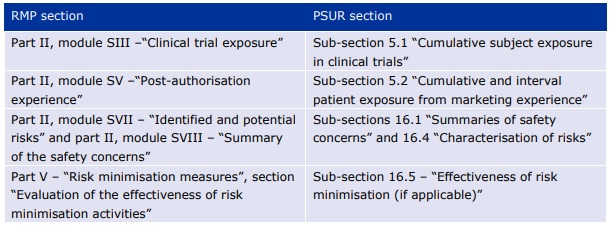
Table V.3. Periodic safety update report and risk management plan modules containing similar information (however, may not be in identical format and may not be interchangeable)
V.B.12. Quality systems and record management
Although many experts may be involved in writing the RMP, the final responsibility for its quality, accuracy and scientific integrity lies with the marketing authorization applicant/holder. As such the QPPV should be aware of and have sufficient authority over the content. The MAH is responsible for updating the RMP when new information becomes available and should apply the quality principles detailed in GVP Module I. The MAH should maintain records of when RMPs were submitted to the SFDA and the significant changes between RMP versions. These records, the RMPs and any documents relating to information within the RMP may be subject to audit and inspection by pharmacovigilance inspectors.
V.C. OPERATION WITHIN THE KSA
V.C.1. Requirements for the applicant/MAH in the KSA
For all new marketing applications, the applicant shall submit the RMP describing the risk management system, together with a summary. A SSA must be submitted with the RMP whenever an EU RMP (or alternative RMP where no current EU RMP exists) is submitted (see V.B.10.9.). The SSA is not required only if the RMP was prepared specifically for Saudi Arabia.In the post-authorization phase, an RMP update or a new RMP may need to be submitted at any time:
- At the request of the SFDA when there is a concern about a risk affecting the benefit-risk balance.
- With an application involving a change to an existing marketing authorization when the data included leads to a change in the list of the safety concerns, or when a new additional pharmacovigilance activity or a new risk minimization activity is needed or is proposed to be removed. The RMP update may be warranted as a result of data submitted with applications such as new or significant change to the indication, a new dosage form, a new route of administration, a new manufacturing process of a biotechnologically-derived product.
The need for an RMP or an update to the RMP should be discussed with the SFDA, as appropriate, well in advance of the submission of an application involving a significant change to an existing marketing authorization. Post-authorization RMPs can be submitted through e-mail (NPC.Drug@sfda.gov.sa).
V.C.1.1. Risk management plans with initial marketing authorization applications
For full initial marketing authorization applications, all parts of an RMP should be submitted (see V.B.4.). For other types of initial marketing authorization applications, the requirements for the RMP content follow the concept of proportionality to the identified risks and potential risks of the medicinal product, and the need for post-authorization safety data; therefore, certain parts or modules may have reduced content requirements or may be left empty, where not applicable.
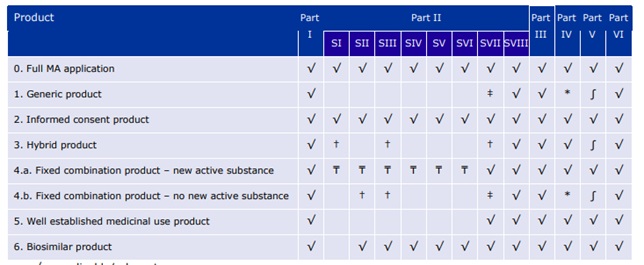
Table V.4. Summary of minimum RMP requirements for initial marketing authorization applications (for full description see text below)

![]()
√ = applicable/relevant
‡ = relevant only if “originator" product does not have an RMP and its safety profile is not published on
CMDh website
* = relevant only when a PAES was imposed for the “originator" product
∫ = statement of alignment of safety information in PI is sufficient
† = requirements based on risk proportionality principle, addressing new data generated or differences
with the “originator" product
₸ = focus on the new active substance
V.C.1.1.1. New applications, i.e. “generic"
The elements for new applications are as following:
· RMP part I: The elements are the same as for initial marketing authorization application for a full application.
· RMP part II: there are two situations possible:
1. The originator product has an RMP: RMP modules SI-SVII may not be applicable. Module SVIII should include the summary of the safety concerns, in line with the originator product. If the applicant considers that the available evidence justifies the removal or the change of a safety concern, then data in module SVII should also be included to address the safety concern and detailing the applicant's arguments. Similarly, if the applicant has identified a new safety concern specific to the generic product (e.g. risks associated with a new excipient or a new safety concern raised from any clinical data generated), this should be discussed and the new safety concern detailed in module SVII.
2. The originator product does not have an RMP: Full modules SVII and SVIII should be included in the RMP. Module SVII should critically analyze available relevant information (e.g. own pre-clinical and clinical data, scientific literature, originator product's product information) and propose a list of important identified and potential risks as well as missing information.
· RMP part III: This should include a description of the routine pharmacovigilance activities, as detailed in V.B.6.1.. The applicant is strongly encouraged to contribute to and participate in the planned or ongoing studies performed by the marketing authorization holder of the originator product, when it is important that all available (prospective) data is collected in one study. This may be the case for instance when data from patients using the new product are important to further characterize the safety profile of the substance and enrolling patients in separate studies with the same or similar objectives creates an unnecessary burden on patients, clinicians or investigators (e.g. pregnancy registries, disease registries, any PASS evaluating long-term use). The SFDA may also consider imposing studies to be conducted for generic products as applicable (e.g. within the context of referrals when generic products are involved or as consequence of the outcome of a referral imposing a study to the originator product).
· RMP part IV: This part of the RMP may be left empty unless a PAES has been imposed to be conducted for the generic product (e.g. following a referral).
· RMP part V: When the originator product does not have additional risk minimization activities, a statement that the safety information in the product information of the generic product is aligned with the originator product is sufficient for RMP part V. Where new risks have been identified for the generic product, the risk minimization activities for such safety concerns should be presented in part V, following the same elements as for a full marketing authorization application.
If the originator product does have additional risk minimization activities, a full part V is required for the generic product.
· RMP part VI: The elements are the same as for a full initial marketing authorization application, to the extent of data requested and provided in other parts of the RMP, as per above.
· RMP part VII: The elements are the same for a full initial marketing authorization application. For RMP annexes 4 and 5, the applicant is strongly encouraged to use materials as similar, in content, as possible to the originator product.
V.C.1.1.2. New applications, i.e. “informed consent"
The RMP should be the same as the RMP of the cross-referred medicinal product. An RMP will still be required even if the cross-referred product does not have an RMP. If the marketing authorization holder is the same as for the authorized product, the marketing authorization holder is encouraged to put in place only one RMP document for their products with the same active substance.
V.C.1.1.3. New applications, i.e. “hybrid"
The RMP elements are the same as for a generic product. However, for changes in the active substance(s), therapeutic indications, strength, pharmaceutical form or route of administration, the applicant should discuss in RMP module SVII whether this results in the addition or deletion of a safety concern. Clinical trial data generated to support the application should be discussed in the RMP, as appropriate (e.g. RMP part II, modules SI, SIII). Other parts of the RMP should also be aligned (e.g. parts V and VI).
V.C.1.1.4. New applications, i.e. involving “fixed combination"
There are two situations:
1. The combination contains a new active substance: A full RMP, following the elements as for full initial marketing authorization application, should be submitted. RMP modules SI-SVI should focus on the new active substance.
2. The combination does not contain a new active substance: The RMP should follow the elements for a generic product. For the purpose of establishing the elements of RMP part II, “the originator product" should be read as “any/all authorized products containing the same active substances included in the new product".
In addition, new data generated with the fixed combination should be provided in modules SII and SIII.
V.C.1.1.5. New applications, i.e. “well established medicinal use"
The elements are as follows:
· RMP part I: The elements are the same as for a full initial marketing authorization application.
· RMP part II: Only RMP modules SVII and SVIII might be applicable. The applicant is required to justify the proposed safety concerns, or the lack of any thereof, using available evidence from published scientific literature.
· RMP parts III-VII: The elements are the same as for a full initial marketing authorization application.
V.C.1.1.6. New applications, i.e. “biosimilar products"
For new applications for biosimilar products, the RMP elements are described in GVP P. II.
V.C.1.2. Risk management plans first submitted post-authorization
V.C.1.2.1. New risk management plans at the request of the SFDA to address one or more safety concerns
The elements are the same as those applicable to a generic product where the originator product does not have an RMP (see V.C.1.1.1.).
Two possible scenarios are envisaged:
1. MAHs may be requested to submit an RMP with an RMP module SVII focused on the safety concern(s) evaluated in the procedure. Other safety concerns should be included as needed.
2. MAHs may be requested to submit an RMP based on a comprehensive identification of safety concerns.
It is left to the discretion of the SFDA, which is the most appropriate in given circumstances.
V.C.1.2.2. Unsolicited risk management plan submission in post-authorization phase
This RMP follows the elements of the type of marketing authorization under which this medicinal product was initially submitted (i.e. full marketing authorization application, generic medicinal products, “informed consent" applications, etc., see V.C.1.1.).
V.C.2. Submission of a risk management plan to the SFDA
Currently, for authorized products, the RMP is submitted as PDF files within the eCTD/CTD submission. Following a decision where the procedure has involved the submission of an RMP, MAHs should submit the RMP annex I in XML format. RMP annex I provides the key information regarding the RMP in a structured electronic format. Hence, this annex should be submitted only upon request from the SFDA.
The initial RMP should be submitted as part of the initial marketing authorization, or if required, for those products that do not have an RMP, through the appropriate post-authorization procedure.
V.C.2.1. Risk management plans updates
An RMP update including the Saudi-Specific Annex (SSA) (see V.B.10.9.) is expected to be submitted at any time when there is a change in the list of the safety concerns, or when there is a new or a significant change in the existing additional pharmacovigilance or additional risk minimization activities. The significant changes of the existing additional pharmacovigilance and risk minimization activities may include removing such activities from the RMP. For example, a change in study objectives, population or due date of final results, or addition of a new safety concern in the key messages of the educational materials would be expected to be reflected in an updated RMP with the procedure triggering those changes.
An update of the RMP might be considered when data submitted in the procedure results or is expected to result in changes of routine pharmacovigilance activities beyond adverse reaction reporting and signal detection activities, or of routine risk minimization activities recommending specific clinical measures to address the risk. For example, a change in study objectives, population or due date of final results, or addition of a new safety concern in the key messages of the educational materials would be expected to be reflected in an updated RMP with the procedure triggering those changes.
An update of the RMP might be considered when data submitted in the procedure results or is expected to result in changes of routine pharmacovigilance activities beyond adverse reaction reporting and signal detection activities, or of routine risk minimisation activities recommending specific clinical measures to address the risk. For example, an RMP update might also be warranted with a significant change of the plans for annual enhanced safety surveillance (routine pharmacovigilance activity), or when monitoring of renal function is added as a recommendation in the Special warnings and precautions for use section 4.4 of the SPC (routine risk minimization activity). The need to update the plans to evaluate the effectiveness of risk minimization activities should also be considered with such updates.
When an emerging safety issue is still under assessment (as defined in GVP Module VI), in particular in the context of a signal or potential risk that could be an important identified risk, an RMP update may be required if the emerging safety issue is confirmed and the important identified or potential risk requires to be added to the list of safety concerns in the RMP.
Unless requested otherwise, a track-changes RMP document should be included with every RMP update, showing changes introduced in the latest update (as applicable), as well as compared with the “current" approved version of the RMP.
A medicinal product can only have one “current" approved version of an RMP. If several updates to the RMP are submitted during the course of a procedure, the version considered as the “current" approved RMP for future updates and track-changes purposes shall be the one submitted with the closing sequence of the procedure.
When an RMP update is submitted with a procedure, the RMP is considered approved at the end of the procedure, when all changes are considered acceptable.
RMP management with parallel procedures
If a medicinal product has more than one concurrently on-going procedure which requires submission of an RMP, ideally a combined RMP should be submitted with appropriate separation of data in RMP module SIII. The best regulatory path for the RMP update in case of multiple procedures potentially impacting on the RMP content should be discussed with the SFDA before submission.
RMP updates with the PSUR
If, when preparing a PSUR, there is a need for changes to the RMP as a result of new safety concerns, or other data presented in the PSUR, then an updated RMP should be submitted at the same time. In this case no stand-alone RMP variation is necessary. Should only the timing for submission of both documents coincide, but the changes are not related to each other, then the RMP submission should be handled as a stand-alone variation.
MAHs should take the opportunity of another upcoming procedure to update their RMP. Alternatively, MAHs should submit a separate variation to update their RMP.